What's in this guide
Ask most people about Motor City Dubai and they mention the race track. Live there for a week and you notice something else entirely: it is one of the very few communities in the city built to a human scale. Low-rise buildings, cobbled streets, shaded pavements you can actually use in April, and almost everything you need inside a ten-minute walk.
That combination — suburban calm with real amenities on the doorstep — is why Motor City keeps showing up in searches from both end-users and investors. Below is the practical version.
1. Getting in and out: entrances and roads
Access is the first thing serious buyers ask about, and it is one of Motor City's strongest cards. The community currently has three main entrances:
- Umm Suqeim Street — the most direct link toward Al Barsha, Mall of the Emirates and the Sheikh Zayed Road corridor.
- Hessa Street — the everyday route to Dubai Internet City, Media City, JLT and Dubai Marina.
- Sheikh Zayed bin Hamdan Al Nahyan Street — the southern approach, connecting toward Arabian Ranches, Dubai Sports City and the Emirates Road side.
Having three separate entrances matters more than it sounds. When one is congested, you have two alternatives — something residents of single-entry communities do not get.
What is coming: a new entrance is planned to connect Motor City directly onto Sheikh Mohammed bin Zayed Road (E311). Today you reach E311 via the surrounding street network; a direct link removes that step entirely and shortens runs toward Abu Dhabi, Sharjah and the northern emirates. For anyone weighing a purchase now, this is the kind of infrastructure change that tends to show up in pricing after it opens, not before.
The Gold Line changes the picture
Motor City has always been a car-led community — there is no metro station serving it today. That is set to change: the Dubai Metro Gold Line, approved in April 2026, is planned to run through Motor City, following the boulevard along the length of the community.
The Gold Line is a 42 km, fully underground line with 18 stations, running from Al Ghubaiba to Jumeirah Golf Estates, with interchanges to the Red Line, Green Line and Etihad Rail. It is scheduled to open on 9 September 2032. RTA has not yet published final station names or exact stop positions.
For investors, this is the single most consequential thing on Motor City's horizon. In Dubai, metro access has historically supported both rental demand and pricing in established, previously car-dependent communities — and Motor City is exactly that profile.
2. The four parts of Motor City
Motor City is not one uniform block. It splits into four distinct zones, and knowing which is which changes what you should be paying:
| Zone | What it is |
|---|---|
| Uptown Motor City | The apartment heart of the community. Low-rise residential blocks around a pedestrianised plaza with retail, cafés and supermarkets at street level. This is where most apartment transactions happen. |
| Green Community Motor City | The villa and townhouse side. Larger plots, private gardens, mature landscaping and a quieter, greener feel. Family-oriented and typically longer tenancies. |
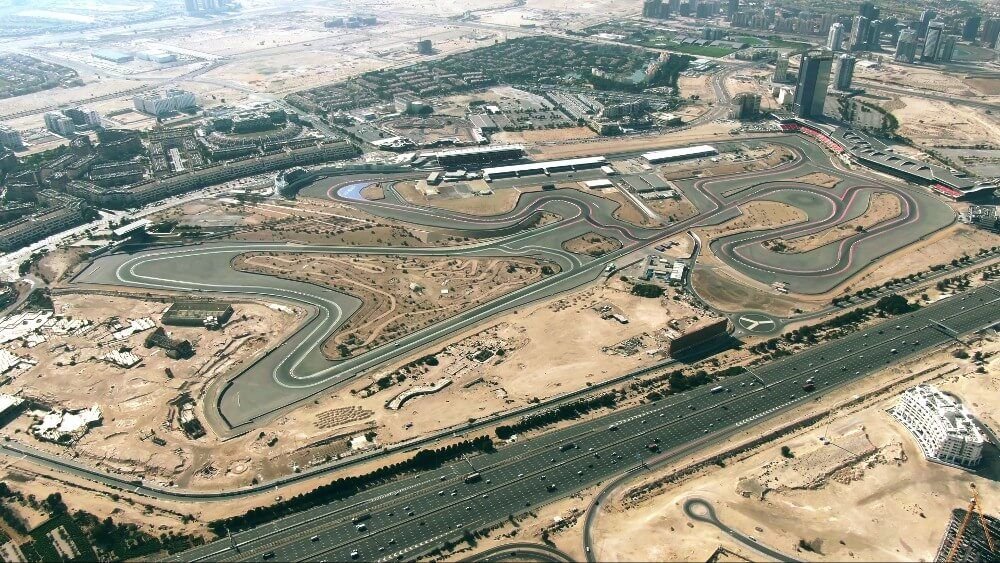
| Dubai Autodrome | The motorsport core — the circuit, the karting facilities and the events calendar that gives the community its name and identity. |
| Business Park | The commercial cluster: offices, showrooms and service businesses. It is why Motor City has a working daytime population, not just a residential one. |
3. Dubai Autodrome & the Kartdrome
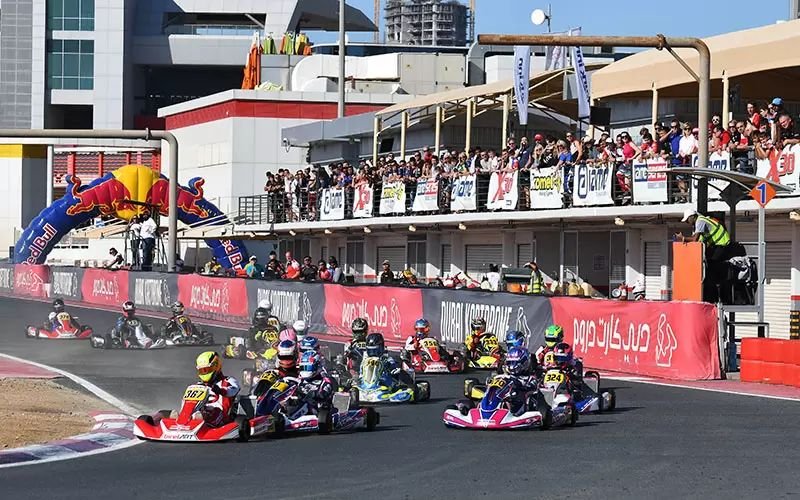
Motor City contains the only motor racing circuit in Dubai — the Dubai Autodrome. It is a full FIA-standard circuit hosting racing series, track days, driving experiences and corporate events through the year.
Alongside it sits the Kartdrome, with both an outdoor and an indoor karting circuit — which is the part families actually use most, year-round, regardless of the weather.
Practical note for buyers: event days are scheduled and predictable. Buildings on the southern edge of Uptown can hear engines during major events; Green Community and the northern blocks generally do not. If noise is a concern, view on an event weekend rather than a quiet Tuesday.
4. Restaurants and cafés
Motor City's food scene is genuinely strong for a suburban community, and heavily weighted toward Levantine cooking. The names residents actually name:
- Allo Beirut — Lebanese, and one of the busiest spots in the community.
- Manara Beirut — Lebanese grills and mezze.
- Al Safadi — long-established Lebanese, a Dubai institution.
- Hala Shawarma — the everyday shawarma stop.
- Malak Al Tawouk — charcoal tawouk and grills.
Alongside these sits the usual layer of cafés, bakeries and international chains around the Uptown plaza and First Avenue. The relevant point for buyers is not the specific list — it is that you can eat out properly without leaving the community, which is not true of most comparably priced areas.
5. Supermarkets, clinics and pharmacies
This is where Motor City quietly beats most of its price competitors. Within the community you have four separate supermarket options:
Add to that medical clinics and pharmacies operating inside the community — so routine appointments, prescriptions and a paediatric visit do not require a drive to another district. For families, that single fact does more for day-to-day quality of life than most amenity lists.
On the retail side, Brands For Less has a presence here too, alongside the salons, dry cleaners and service shops that make a community self-sufficient rather than dormitory.
6. Schools
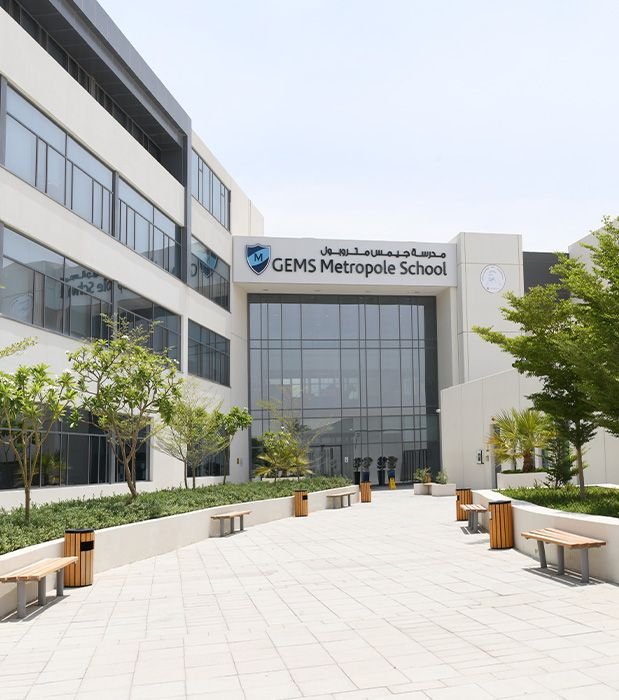
Motor City has GEMS Metropole School inside the community, plus nurseries. Being able to walk or drive five minutes to school — instead of joining a 40-minute school-run convoy — is one of the main reasons families stay in Motor City for years rather than a single lease cycle. From an investment angle, that translates directly into tenant retention.
7. Business, retail and the Control Tower
Motor City is not purely residential, and that is deliberate. Inside the community you will find:
- Control Tower — the community's landmark commercial tower and its best-known office address.
- BMW and MINI showroom — a full sales centre, fitting for a district built around motoring.
- Vehicle testing and registration centre — renewals and inspections handled inside the community instead of a cross-city trip.
- Business Park — the wider cluster of offices and service businesses.
The commercial layer is what gives Motor City a daytime economy: cafés that are busy at 11am, retail that survives, and a second demand pool for anyone holding a unit here.
8. Investment: what the returns look like
Motor City's investment case is not built on hype. It is built on the boring things: an established community, real amenities, schools, and tenants who renew. That shows up in the yield.
Within that range, the pattern is consistent across Dubai: smaller units yield more. Studios and one-bedroom apartments sit at the top of the range; three-bedroom apartments, townhouses and villas sit lower but hold longer tenancies and stronger capital stories.
What eats into the gross number
Service charges in Motor City apartments typically run around AED 14–18 per square foot, with Green Community villas materially lower. After service charges, management and maintenance, expect net yield to land roughly 1–1.5 percentage points below gross. Any broker quoting you a gross figure without mentioning that is selling, not advising.
Why Motor City holds up
- Freehold — open to foreign and expat buyers with full ownership rights.
- Established, not speculative — the community is built, occupied and functioning, so rental demand is observable rather than projected.
- Tenant retention — schools, clinics and walkable retail keep families in place for multiple lease cycles, which reduces void periods.
- Infrastructure upside — the planned direct E311 entrance is a real accessibility improvement that has not yet been fully priced in.
- Golden Visa threshold — units valued at AED 2 million or above can qualify, which in Motor City means larger apartments, townhouses and Green Community villas.
9. Frequently asked questions
Is Motor City a good place to live in Dubai?
For families and anyone who values walkability, yes. It offers low-rise density, four supermarkets, clinics, pharmacies, schools and restaurants inside the community, plus three road entrances. The trade-off is that it is suburban — you are 20–25 minutes from Downtown rather than in it.
Is Motor City freehold?
Yes. Motor City is a freehold community, open to foreign nationals and expatriate buyers with full ownership rights.
How do you get to Motor City?
Currently via three entrances: Umm Suqeim Street, Hessa Street, and Sheikh Zayed bin Hamdan Al Nahyan Street. A new entrance connecting directly to Sheikh Mohammed bin Zayed Road (E311) is planned.
Is there a metro station in Motor City?
Not today — there is no metro station currently serving Motor City, and the community is car-led with RTA bus links to nearby stations. But that changes. The Dubai Metro Gold Line, approved in April 2026, is planned to run through Motor City, tracking along the boulevard through the community. The line is 42 km, fully underground, with 18 stations, and is scheduled to open on 9 September 2032. RTA has not yet published final station names or exact stop positions.
What is the rental yield in Motor City?
Gross yields for apartments generally run in the 6–7.5% range as at August 2026, with studios and one-bedrooms at the higher end. Net yields typically sit 1–1.5 points lower after service charges. Verify per-building figures on DXB Interact before committing.
Is the Autodrome noisy?
Only on event days, and those are scheduled. Southern Uptown buildings hear it most; Green Community and northern blocks generally do not. If it matters to you, view on an event weekend.
Are there schools in Motor City?
Yes — GEMS Metropole School sits inside the community, along with nurseries, and Dubai Sports City and Arabian Ranches schools are a short drive away.
Interested in investment opportunities in Motor City?
Get in touch. Ali will walk you through what is genuinely available right now — current pricing, payment plans, per-building yields and the exit maths — before you commit to anything.